How Italy’s Heat Warnings Shape Daily Life: A Summer Explainer
Italy's daily heat bulletins come in four colours, and they quietly rearrange shop hours, work schedules...

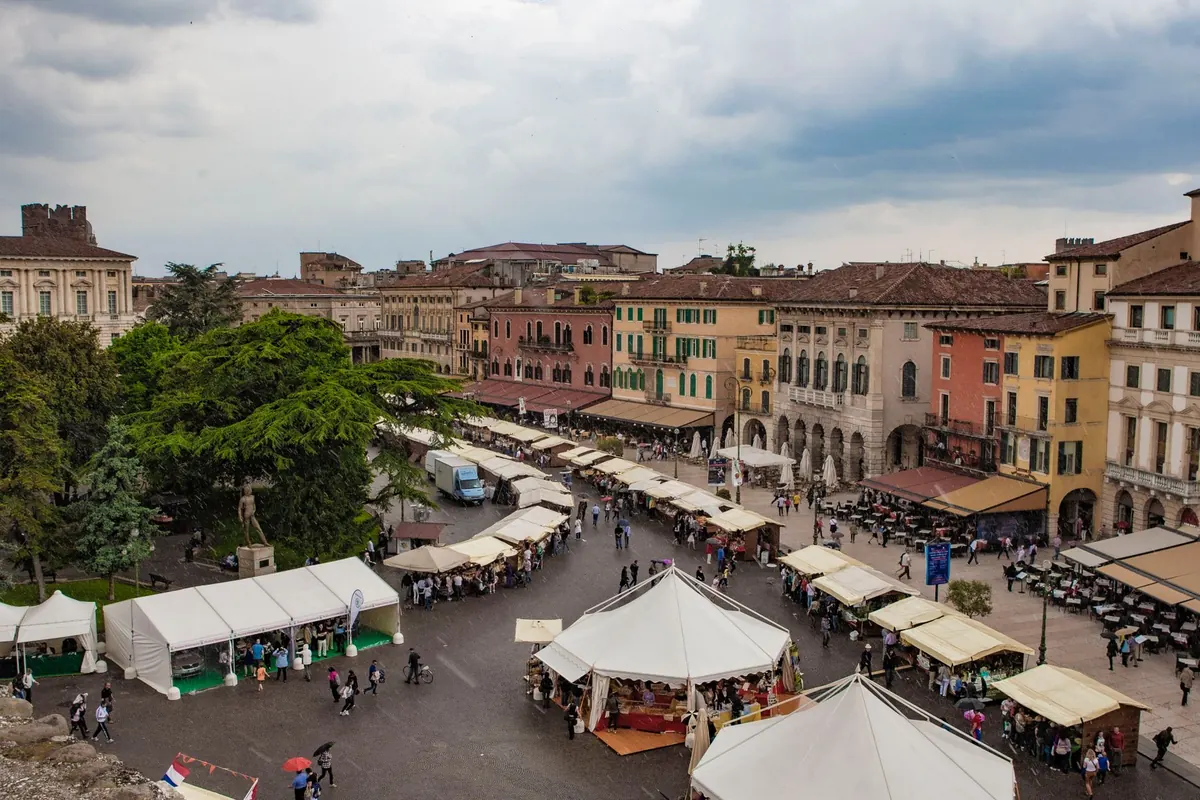
You arrive on foot, dragging a bag over cobbles, and there it is: a wide, flat opening with a church at one end, a bar at the other, three men on a bench and a delivery van idling in the middle. It looks like a place you pass through on the way to somewhere better. Give it twenty minutes and the impression reverses. The square is not the gap between the interesting buildings; it is where the town keeps its clock, its gossip and its manners.
Most visitors treat a piazza as a photo stop: two minutes, one wide-angle shot, then off to the museum. That is a waste. Sit down, order something small, and stay long enough for the same face to pass twice. That is when the square starts explaining itself.
Piazza simply means square, but the word comes with a job description attached. A piazza is the town’s shared front room, and it has been designed — sometimes carefully, sometimes by accident — to hold people who are not doing anything in particular. That is the point of it. It is where you say “see you in piazza” without naming a time or a corner, because eventually everyone passes through.
The furniture tells you the function. Church at one end, town hall at the other, a bar with chairs angled outwards so people can watch. A fountain, a statue, a war memorial, a noticeboard. In a small hill town the piazza might be barely wide enough for four café tables and a parked Fiat. In a city it can be a sweep of stone you need five minutes to cross. The rules of behaviour are the same in both.
Look at the floor, too. Italian squares are usually paved, not planted. Grass is for parks; stone is for standing on, walking across and sweeping. The stone is also a record: different colours or patterns often mark where a market once stood, or where an older building was pulled down and the space was opened up.
Between roughly seven and ten, the piazza is a workplace. Shutters go up with a clatter. A van reverses badly. Someone sweeps the step. The bar fills with people who are not staying: they order at the counter, drink in two sips, exchange three sentences and leave. Nobody sits down. Sitting is for later in the day, and it costs more, because the table is the thing you are renting.
This is the hour to notice the small infrastructure of daily life. The newspaper kiosk with its racks outside. The pharmacy with the green cross. The tabaccaio where you buy stamps, bus tickets and phone credit as well as cigarettes. On market days, the square is half occupied by stalls and the vans that feed them, and by nine it smells of peaches and diesel. By one in the afternoon the stalls are gone and the stone has been hosed down, as if nothing happened.
Morning is also when greetings do the most work. Watch how people pass each other. Workers nod. Older men stop and shake hands. Someone shouts a name across fifteen metres and gets a wave in return. You do not need to understand the words to read the temperature of the town.
Some time after one, the square empties fast. Shutters come down, chairs are stacked, the bar closes, and the only sounds are a fan, a pigeon and a scooter going somewhere else. Visitors often read this as a dead town and move on. It is not dead. It is resting, and the pause is part of the rhythm you came to see.
Use the quiet hour for the things that require no crowd: reading inscriptions, following the lines of the façade, finding the shaded side, noticing how the buildings lean into the space and how the streets leave it at odd angles. A square that felt cramped at noon can feel generous when it is empty. Then sit in whatever shade exists and wait. The town will come back out, usually earlier than you expect.
In the late afternoon and early evening — the exact hour slides with the season and the latitude — the piazza refills for a different purpose. People have changed out of work clothes. They are not shopping and not rushing. They are walking, slowly and deliberately, along a loop that everyone seems to know: from the church corner to the far side, up one street, back along another, two or three times.
That walk is the passeggiata, and it is a social act rather than exercise. You go to be seen and to see. Teenagers cluster at one edge, families with prams take the middle, older couples take the bench with the best view of the traffic. Aperitivo tables fill with people having one drink and a bowl of olives. Small children run in arcs and are called back. The volume rises, but it is a conversational hum rather than noise.
If you want one piece of advice for the whole day, it is this: come back at passeggiata time. The same square you photographed at eleven will look and sound like a different place.
You do not need a guide for this. Position yourself with a view of the widest part and let the place show you its structure.
Try to see the same square three times in one day: around eight in the morning, just after one, and at passeggiata hour. Nothing else will teach you as much about how the town runs. Carry small change for a coffee and a bottle of water, and keep a few coins for the bar even if you mostly sit on the free bench.
Learn four phrases before you go — buongiorno, buonasera, per favore, il conto — and use them in that order. Check the noticeboards for market days, since a square with stalls is a different square entirely. If there is a bench in shade, take it, and resist the urge to fill the silence. The piazza does not need your itinerary. It needs you to stay put long enough to notice what is already happening.
Italy's daily heat bulletins come in four colours, and they quietly rearrange shop hours, work schedules...
A practical, room-by-room guide to sorting waste in an Italian apartment, reading your comune's collection...
Italy runs on two calendars: the national holidays that close banks and schools, and the local saint's day...